Showing posts with label Evangelicalism. Show all posts

April 14, 2025

Chris Anderson's The Scandal of Schism Reviewed by George Zeller

What follows are select excerpts from George Zeller's comprehensive review of Chris Anderson's, The Scandal of Schism.

I
n light of the helpful contributions Anderson has made with his hymn compositions, etc., I was saddened to learn that he had published this book which is an attack against fundamentalists. He accuses them of causing schisms and sinful divisions in the churches. In this review I will cite page numbers of Anderson’s book so that his statements can be easily found and checked.


Anderson’s new attack against fundamentalists reminds me of a very similar attack by Jack Van Impe as set forth in his book, Heart Disease in Christ’s Body (written 1984). In this book Van Impe expressed his concern over the divisiveness within the church and he makes a strong plea for broader fellowship among brethren based on love and doctrinal toleration. The book was a virulent attack against what he labeled as“neo-fundamentalists” or “extreme separatists.” I reviewed that book over 40 years ago.See https://middletownbiblechurch.org/separate/heartdis.pdf

Anderson’s position reminds me of a book Chuck Swindoll wrote back in 1990 called, The Grace Awakening. He attacked believers with high standards as “legalists” and pushed his “freegrace” ideas way beyond their boundaries.

Let me comment briefly on some of these “divisive issues” mentioned by Anderson:
Contemporary music- Anderson has no problem with the music of the Gettys, Sovereign Grace, CityAlight or Steve Green (pages 62,132,125 ).

Concerning degrees of Calvinism- Anderson wants believers to be united around the gospel, but how can we join together with men who deny that “God so loved the world,” teaching instead that He loved and died only for the “world of the elect.” Limited atonement is a denial of the true gospel which is defined in 1 Corinthians 15:3-4. Also many Calvinists teach that regeneration precedes faith. That is, you do not believe to be born again but you are born again so that you can believe. But according to Anderson we should all seek unity under one big tent and not be concerned about such doctrines.

Opinions of a well-known author. Anderson seems to be referring to men such as John MacArthur, Al Mohler, John Piper, etc. Are we to embrace such men even if they hold some very unbiblical positions?
  1. MacArthur’s denial of the eternal Sonship of Christ (teaching that Christ did not become the Son of God until His incarnation);
  2. MacArthur’s teaching that a believer does not have an old nature, but only a new nature in Christ;
  3. MacArthur’s teaching on “Lordship Salvation,” that the requirements for salvation include obedience, surrender and fulfilling the demands of discipleship;
  4. MacArthur’s denial of unlimited atonement.
  5. MacArthur’s weak positions on dispensationalism; etc.
Does Anderson believe that exposing errors like this is an attack on Christian unity? Apparently he does.

Excessively modest dress- He criticizes women for “excessively modest dress” (p. 53) but has nothing to say about women, even professing believers, who are excessively immodest.

Second degree separation- Anderson is opposed to secondary separation and believes that fundamentalists are guilty of “excessive separation” (p. 58).

The Use of Alcohol- There is a trend today towards a position where believers may partake of alcohol in moderation but avoid getting drunk. The IFCA in recent years changed their policy on alcohol, basically allowing for social drinking and the consumption of alcohol but condemning drunkenness. Anderson takes the same position.

Other positions Anderson takes, reviewed by Zeller, include:
  • The timing of the rapture
  • How people should dress for worship
  • Worship Styles
  • Short hair on men

Ernest Pickering in his excellent book,
Biblical Separation, wrote, “Church history yields no example of a group or denomination that, having been captured by apostates, has been rescued and restored to a Biblical witness.” Anderson takes issue with this statement and believes that the Southern Baptist Convention has been rescued and restored to a Biblical witness, due to a conservative resurgence around 1979 (p. 72 footnote). He accuses David Beale of maligning SBC brethren instead of encouraging them (p. 73). He cites Beale’s book, SBC: House on the Sand? and claims that the SBC experienced a successful conservative resurgence and a great victory (p. 73 footnote). This “conservative resurgence” in the SBC is highly questionable.

How do we handle the various teachings and positions that are held among Bible-believing Christians? Anderson believes that if a person holds to the fundamentals of the faith and preaches the true gospel then he should be welcomed into “one big gospel tent” and we should not fight over any of these secondary issues. Anderson loves the slogan, “In essentials, unity. In non-essentials, liberty. In all things, charity” (p. 151). The problem here is this: Who decides what is non-essential?

How can we summarize the position of Chris Anderson?
The following quotation is taken from WorldwideImpact, a Campus Crusade for Christ publication, May 1972. Even though this was written a number of years ago, it seems to accurately reflect Anderson’s position,
We are to put aside the peripheral issues (that is, doctrinal issues) that divide us .... Men are reminded that the real issue is Jesus Christ, and that we are to love one another even if we do not agree theologically or philosophically [or doctrinally]. I encourage you to apply this principle of love and acceptance with all of your Christian friends, and help make Christ the real issue.
This philosophy could perhaps be restated as follows: “It is sinful to divide the body of Christ on earth by separating ourselves from any Christian over any doctrinal or ecclesiastical issue. The mark of true orthodoxy is love, not doctrine.

Today as I think of that song [
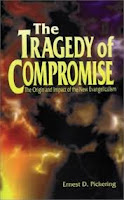
You are Always Good] and the several other Chris Anderson songs that have meant so much to me and to our congregation, I am saddened. I am saddened because the man who had the potential to be one of the finest song writers of our day has decided to go on the attack against fundamentalists and join the ranks of a much wider and broader evangelicalism. It brings to mind the title of Dr. Pickering’s book, The Tragedy of Compromise.

See Brother Zeller's Full Review. It is the sixth article down.

Site Publisher's Closure:
Chris Anderson is squarely among the non-separatist evangelicals who will allow for, tolerate, ignore and excuse a wide range of doctrinal aberrations for the sake of unity. Anderson is doing all he can to influence the next generation to join him in compromise of the Scriptures for the sake of unity with his mentors and friends in T4G and The Gospel Coalition.


LM

Related Reading


February 23, 2025

Archival Series: "Our Children Learn Not Only What We Teach Them, But By What We Tolerate"

In its history Northland International University (NIU), the former Northland Baptist Bible College, has not been in a situation requiring a strong call to separate. In the early days Northland was a refreshing voice because of it’s good conservative stands, refreshing Northwood’s feel, friendly campus, servant’s heart, with a love for revival and the Lord Jesus Christ. Students were being discipled with a demerits system in place and properly emphasized for correction and growth. There are many fine pastors and Christian workers serving the Lord today because of Northland’s ministry to them.

Our children learn not only what we teach them, but by what we tolerate.”

According to NIU alumni Dr. Les Ollila (former NIU Chancellor) said that over and over to the student body. With decisions made in recent weeks at Northland a new kind of teaching and tolerance has come to the campus.

In 2005, because of Rick Holland’s inclusion as a speaker, Dr. Ollila pulled out of the God-Focused conference. It is believed that NIU president Matt Olson insisted Ollila withdraw. Just five years later Dr. Ollila along with Matt Olson, Sam Horn and Doug McLachlan reach out to and travel across the country to meet with John MacArthur, Rick Holland and Phil Johnson. Then Ollila/Olson/NIU have this same man (Rick Holland) speak in chapel to impressionable young people.

What changed between 2005 and 2010? It wasn’t Rick Holland. He is today what he was in 2005: a non-separatist evangelical, advocate for Lordship Salvation1 and the founder of the Resolved Conference, which merges preaching with the world’s CCM/rock culture and extreme Charismatic style worship.2 NIU embracing MacArthur, Johnson and putting Rick Holland in its chapel pulpit confirms they are willing to teach Lordship Salvation, teach/tolerate a neutered form of biblical separatism, tolerate and allow for the worldly culture of events such as the Resolved Conference.

Regrettably, in just five years, Les Ollila has changed. NIU is being transformed by its president, Matt Olson, and administration decisions. With and because of their change the historical trajectory of NIU has been radically altered. [On April 30, 2015 NIU Announced its Closure.]

With the changes at NIU many share concerns over ministry, direction and leanings of NIU. There is a declining interest in maintaining fellowship by many former alums, good Christian leaders and lay workers. Many who have some relationship with NIU are contacting the administration to express their concerns. Others will quietly pull away and encourage their young people to look elsewhere for a Christian college. Now unfortunately, because NIU’s administration wants it both ways their friendship base will have to change just to maintain status quo not to mention growth.

Many alumni view what Northland is doing today as completely contrary to what was taught not very long ago. Students were told that they will become in the future based on two things: the friends you have and the books you read. Is it any wonder they have done what they have? If you live long enough, you will have to change your friends or change your doctrine. NIU is changing its friends for new ones in the so-call  “conservative” evangelicalism. Certain doctrines, separatism in particular, is not far from being compromised for the sake of their new friends.

Why do men who claim a heritage and commitment to separatist Fundamentalism take the initiative to reach out to evangelicals who openly repudiate biblical separation in principle and in application? Is it possible that these alleged fundamental separatists want to retain the label they are comfortable with, but have lost the will to contend, to wage the battle for fidelity to the God-given mandates? Is it possible they will redefine the principles and application of separation to accommodate the need to tolerate, allow for and excuse aberrant doctrine and ecumenism for the sake of fellowship with evangelicals?

Have self-described fundamental separatists decided to move toward a safe, non-confrontational middle ground at the expense of fidelity to the Word of God on separation to be accepted and respected by evangelicals?

The “conservative” evangelicals have not and show no inclination of moving toward a Fundamentalist’s commitment to authentic biblical separation. Someone is moving, someone is changing, and it isn’t the evangelicals.

With recent revelations we are learning a great deal about Northland’s new trajectory. NIU will try to placate alumni and donors while it moves further away from its historic stand. Matt Olson’s recent open letter to Friends in Ministry was just such an attempt that, in the opinion of many, was an abject failure. If Northland maintains this new direction and discussions among concerned persons are any indication of a national response, I fear Northland’s best days are behind it and the worst is yet to come.

Northland’s new trajectory has a historic parallel. The devastating effects of introducing Evangelicalism’s philosophy and practices into a biblical Fundamentalist setting are no more stark than the demise of Pillsbury Baptist Bible College.3


LM
First Published Nov. 29, 2010 & again Jan. 2, 2018

For previous articles in this series see-

NIU’s Convergence With Evangelicalism: What Does It Mean for Impressionable Students?

NIU Presents Executive Pastor of Grace Community Church to It’s Student Body

1) An Example of Lordship Salvation’s Man-Centered Message

2) The Merger of Calvinism With Worldliness, by Dr. Peter Masters

3) Discussion Over the Closing of Pillsbury Baptist Bible College
Although Pillsbury struggled for a number of years to recover itself from the devastating effects of hob-nobbing with Evangelicalism, it never really dealt with (in any real tangible way) its ruined reputation. Although it was repeatedly brought before them by many friends of the college, they never really did what was necessary to regain the trust of the pastors and parents who send students.”

September 3, 2024

Biblical Churches & Schools Cannot Unite With Apostasy

During the presidency of Steve Pettit his primary agenda became unmistakably clear. That was to erase the school’s historic fundamentalist, separatist legacy. The agenda he engineered took various forms. Among them was minimizing and/or removing a commitment to ecclesiastical separation.1

In articles going back to 2019 we provided numerous examples of this pattern. Steve Pettit and Sam Horn participated in cooperative ministry with Southern Baptists, Presbyterian Reformed, and compromising evangelical men and/or their conferences.  Non-separatist compromisers were given platforms at the university from which to speak to and influence students.2

In 2019 Pastor Travis Smith had written, “Under Dr. Steve Pettit’s leadership BJU continues to follow a path of ecclesiastical compromise, embracing the spirit of Neo-evangelicalism, and rejecting its historical legacy as a Bible fundamental, separatist institution.”3

BJU has installed a new president, Dr. Joshua Crockett. Have we any examples of his stance on ecclesiastical separation?


In May 2024 Pastor Crockett at Morningside Baptist Church hosted a prayer meeting with the whole SBC’s Greenville Baptist Association, led by Al Phillips, Director of Missions. All of BJU was called to come. In the bulletin (at right and below), note the people (and their affiliations) who were chosen to lead the praying.
➢ Praise – All Hail the Power of Jesus’ Name – Todd Jones (Morningside Baptist Church) 
➢ Welcome – Rev. Al Phillips (Greenville [SBC] Baptist Association) 
➢ Prayer of Praise and Thanksgiving – Al Phillips  
➢ Responsive Reading – Psalms 100 – Dr. Matt Wireman (Christ the Redeemer Church)
➢ Prayer of Confession – Rev. Will Broadus (Reconcile Church) 
➢ Prayer for Our Leaders – Dr. Josh Crockett (Morningside Baptist Church) 
➢ Prayer for Schools – Dr. Matt Rogers (Christ Fellowship Cherrydale, SBC) 
➢ Prayer for Peace and Healing – Rev. Joezel Allcea (Nuevo Comienzo.) 
➢ Prayer for Church Unity – Mr. Curtis Carr (One Prayer) 
➢ Prayer for Revival – Dr. Byron Battle (Tabernacle Baptist Church) 
➢ Prayer for Kingdom Advance – Rev. Michael Bayne (Greenville Community Church) 
➢ Prayer of Blessing and Benediction – Dr. Brian Habig (Downtown Presbyterian Church)

The National Day of Prayer is the first Thursday of every May. Many biblical churches wisely choose their own day of prayer. Morningside Baptist Church pastor Dr. Joshua Crockett did not. Biblical churches and schools cannot unite as one with compromisers and apostasy.

As I considered the One Prayer union hosted by Pastor Crockett, Promise Keepers came to mind. From the seven promises of a Promise Keeper, the sixth Promise states, A Promise Keeper is committed to reaching beyond any racial, denominational, generational, and cultural barriers to demonstrate the power of biblical unity.4 The problem with setting aside denominational barriers is you have to set aside, tolerate, allow for, excuse, and ignore doctrinal barriers.

Pastor Crockett joined a cooperative ministry, a mix of denominations, that feature men and women who take doctrinal positions that run them afoul of biblical truthHosting the National Day of Prayer at his church, Pastor Crockett exchanged ecclesiastical, biblical separation for ecumenical compromise. We find his decision to cooperate with “One Prayer” much like Steve Pettit's decision to entangle BJU students with Franklin Graham's ecumenical movement.5

Will BJU through the influence of its new president be returned to its historic stance on biblical (ecclesiastical) separation? Will BJU be returned to its founding principles and practices?6 If the above example provides any insight, we have to conclude, probably not.


LM

Footnotes

1) “Ecclesiastical separation is the flipside of fellowship. A refusal to fellowship (in the sense of theological agreement and ministry which flows out of that agreement) reflects the lifestyle, positions, and values of a church and its members.” A Theology of Separation by Dr. Larry R. Oats, Maranatha Baptist University.

See also, Dispensationalism: A Basis for Ecclesiastical Separation by Dr. Larry R. Oats, Maranatha Baptist University, 

2) Andy Naselli was the featured speaker for the 2019 Dr. Stuart Custer Lecture series. See, FACTS: An Enlarged Discussion by Dr. David Beale

3) Lunging Toward the Cliff of “No Return.” (Nov. 14, 2019)

4) I believe the original stated only denominational” barriers.

5) BJU Embraces Franklin Graham's Ecumenical Movement

6) BJU: A Return to Its Founding Principles & Practices?


April 4, 2024

Bob Jones University: A Return to the Founding Principles & Purpose?

I
n recent days the Bob Jones University (BJU) Board of Trustees met. Among other topics it is believed narrowing the choice for the next president was on the agenda. Reaction to the person who will be named and speculation of what direction his coming might indicate for the university is sure to follow quickly.

The future direction, even viability of BJU remains uncertain. Possibilities include,
  • Status quo- continuation of Steve Pettit's transition toward non-separatist evangelicalism and proliferation of Reformed theology
  • Return to a reasonable semblance of what the best of BJU was prior to Pettit’s arrival
  • Restructure and consolidate across campus
  • Guide the school into a graceful closure
What of the Disenfranchised Base?
Most have moved on, formed or firmed up alliances with other educational institutions to support and send their young people to for Christian education. In March 2017 an opportunity to retain the "conservative" base was lost. See, Steve Pettit's Break With the Conservative Base  Whether or not they can be recovered is uncertain. 

Following that 2017 meeting conditions that raised alarms worsened. For example, but not limited to:
Staff Shake Up
It's widely known that BJU is not renewing the contract of Dean of Fine Arts, Darren Lawson. Lawson and his department are responsible for several presentations that had more in common with Broadway, Hollywood and Disney entertainment standards than conservative Christian principles. Additional persons who are aligned with Lawson's production values may be leaving campus. Budget considerations might lead to a structured downsizing including additional staff layoffs across campus.

Approved Places of Worship
There's been some discussion suggesting Presbyterian (PCA) churches may become off-limits. If the Board moves to add or return churches to a "prohibited" list it will be on a church by church basis. BJU has the right to set and enforce university policy and insist its employees agree to and abide by policies as a condition of employment. The same can be said of the student body. Believers have the right and soul liberty to attend whatever place of worship they choose. Should an employee or student decide to attend a church that does not align with BJU''s guidelines, that individual should leave the university voluntarily or expect to be removed.

A Better Direction
A little over 20 years ago Pillsbury
 could not recover from an agenda similar to what has taken place at BJU. Northland, Clearwater, TTU and Calvary Seminary (Lansdale) all suffered the same fate. Even though insolvency is a possibility BJU possesses a level of resiliency that the closed schools did not. 

In August 2023 we said the search for a new president presents A Choice Between "Respect for" and Returning to the "vision of Its Founder" or the Status Quo. 

Is a new, better future ahead for BJU? Instillation of a new president will be the crossroads. We tend to believe the Board has recognized the necessity of steering the school in a better direction.

If the ministry of BJU is to be saved it will ultimately be through the Lord's intervention. Pray for God to grant the wisdom needed among the decision makers. Pray for the Board to find a pathway to restoration of the very best founding principles and purposes of Bob Jones University. 


LM

Related Reading

“After being the premier fundamentalist academic institution for eighty-seven years, BJU elected Dr. Steve Pettit in 2014, as the president who steered the University out of separatist Fundamentalism into the inclusive, Broad Evangelical movement,” David Beale, Christian Fundamentalism in America (Maitland, FL: Xulon, 2021), 179, 530.


February 13, 2024

What "Philosophy of Ministry" Can Get a Man Invited to be a BJU Conference Speaker?

The annual Bob Jones University Bible Conference begins today, through February 16. Dr. Dave Doran is among the featured speakers. With Doran's invitation we recognize the ongoing pattern of a particular ministry experience BJU finds attractive for new hires and/or conference speakers. From the BJU Alumni Letter, The Voice we read,

"Dr. Alan Benson1 emphasizes in a BJUtoday article that 'Our speakers were chosen from sister institutions who share our biblical philosophy of ministry and passion for the gospel'." That provides a glimpse into the "share[d]...philosophy of ministry" Benson and the Executive Cabinet desire in potential conference speakers and faculty.

In 2022 BJU rehired Richard Stratton. For the recent CoRE Conference Tim Jordan was invited to speak. And, of course, BJU has invited Dave Doran to the current Bible Conference platform. What do these men share in a select application of "philosophy of ministry?" Stratton, Jordan and Doran each directly and/or by extension contributed to the demise of one time Fundamental separatist (Baptistic) colleges.

Stratton was president of Clearwater Christian College (2002-2011) he instituted changes that destroyed the school's legacy and reputation among the base. Clearwater could not recover from Stratton's presidency and consequently closed June 2015.

The Closure of Clearwater Christian College

This Pastor's Perspective of Clearwaters Closure 2

Tim Jordan at Calvary Baptist Seminary (alongside Sam Harbin) destroyed the seminary through a doctrinal shift and entangling the school with new evangelicals.

Closure of Calvary Baptist Seminary: Predictable and Repeatable

Jordan is Accountable for Calvary's Failure and Won't Own Up to It

Doran supported Matt Olson's radical shift at Northland International University. Earlier, 
alongside Kevin Bauder, they supported Tim Jordan's embrace of non-separatist evangelicals and rank new evangelicals.

Northland Closes: The Pattern of Demise Continues

It appears repudiation of Fundamentalism and/or contributing to the demise of any one time fundamental, separatist college is an important consideration for BJU when evaluating potential speakers to appear on campus. We can look back over several years to recognize this pattern. For example BJU hosted Andy Naselli to present lectures at the 2019 Stewart Custer Lecture Series.3

This Bible Conference provides new compelling evidence that the current BJU Board and Executive Cabinet are determined to continue and accelerate Steve Pettit’s erasure of BJU's fundamentalist, separatist moorings.

"Sister Institutions?"
And again from Alan Benson’s statement above, "Our speakers were chosen from sister institutions." And over the years since Pettit’s arrival on campus most of those "sister institutions" are sisters, in large part, by virtue of their commitment to Calvinism and Reformed theology.

An Advocacy for the Advancement of Reformed Theology

BJU Foundations Conference: An Intrusion of Calvinism, Reformed/Covenant Theology, New Calvinism & Lordship Salvation

Candidates for BJU Presidency
Prospective candidates should be mindful that should they be called to interview for the position they will be stepping toward and into the university's transformational agenda into non-separatist evangelicalism.


LM

Footnotes:
1) Alan Benson’s Hidden History

2) "Although all of the above no doubt contribute to the demise of [Clearwater] CCC; I suggest from my vantage point that the leadership of the college over the past 10 years steered the college away from its founder’s purpose, philosophy and vision.  Rather than an institution dedicated to educating, challenging and equipping young people to be “soldiers of Christ”, CCC evolved to a pragmatic philosophy of accommodation lowering her standards, adopting CCM music in her chapels and athletic events and most recently featuring an activity night of rap and rock music." The Pastor's Perspective

3) Excerpt from Dr. David Beale's- FACTS, An Enlarged Discussion

“Dr. Andy Naselli, in his 2006 BJU dissertation, scorns independent, Fundamental Baptists for giving invitations to 'surrender oneself to God.' Naselli criticizes the practice and calls it a 'second blessing.' Naselli unsuccessfully tried to identify the Fundamentalist... He now serves on the faculty of John Piper’s College and Seminary, which are Reformed Charismatic schools urging every Christian to seek all NT gifts, including tongues and healing.... Naselli is a pastor of Piper’s Bethlehem Baptist Church.

Naselli seeks to transform Fundamentalists into Evangelicalism. In 2019, Dr. Pettit brought Naselli back to BJU to present the lectures for the annual Steward Custer Lecture Series. Naselli’s books were promoted. The late Dr. Custer all his life had been a stalwart Fundamentalist. Naselli represents Broad Evangelicalism. The bond between BJU and Evangelicalism has been clear since the beginning of Pettit’s administration.

January 10, 2024

2024 BJU CoRE Conference Speakers

Following Steve Pettit's departure from BJU we ask if his agenda to proliferate Reformed & Covenant theologies on campus remain a priority. We may have the answer from the speaker line up for BJU's 2024 CoRE Conference.

LtR: Doran, Jordan, Dever, Bauder, Harbin
Tim Jordan
: Retired pastor of Calvary Baptist Church at Lansdale, PA. Jordan received his training at Northland Baptist Bible College, Calvary Baptist Theological Seminary (CBTS), and Westminster Theological Seminary. In 1976, Tim's Fundamentalist father, Robert (Chief) Jordan (1925-2009), founded CBTS. In 1986, Tim succeeded his father, as pastor of Calvary Baptist. In 2014, after thirty-eight years of life, CBTS suffered closure, due to weak finances and its moving into New (Broad) Evangelicalism. 

Chancellor Tim Jordan and President Sam Harbin marched CBTS to its death knell by bringing in New Evangelical speakers such as Haddon Robinson and Mark Dever. Haddon Robinson (1931-2017) had been the President of Denver Conservative Baptist Seminary (now Denver Seminary) for twelve years. Mark Dever (b. 1960) is a Reformed theologian and pastor of the SBC church, Capitol Hill Baptist Church, in Washington, DC. He is President of 9Marks, formerly “Center for Church Reform.” In Reformed Theology, there is no biblical future for Israel; such future promises merely pass on as spiritual promises to the Church. Such is included in Dever’s Center for Church Reform. Dever is, furthermore, amillennial in his eschatology.1


CBS Hosts New Evangelical Haddon Robinson

Daniel Dionne MD, in Spokane, Washington, is a certified counselor by the Association of Certified Biblical Counselors (ACBC), an example of Broad Evangelicalism. See Speakers

See weak Doctrine of the Church

Stuart Scott, Professor of Biblical Counseling at Bob Jones University and Seminary, is also the Member Care Director of the ACBC. Scott received his BA at Columbia International University. He received a MDiv at Grace Theological Seminary, a MTh at The Southern Baptist Theological Seminary, and his DMin at Covenant Theological Seminary.

Scott’s current website reports that he still teaches graduate courses adjunctly at John MacArthur’s Master University in Santa Clarita, CA.  For nine years, Scott served as pastor of counseling at MacArthur’s Grace Community Church in Sun Valley, CA.

Scott has a ministry called “One-Eighty Ministries,” and among his most “trusted and faithful advisors” are SBC pastors. On July 6, 2022, Dr. Alan Benson wrote of Stuart Scott, “His careful scholarship and thought leadership exemplify our promise of uncompromised, next-level teaching. Dr. Scott will serve as director of biblical counseling.” See: BJU News

Stuart Scott is no true Fundamentalist. Scott is an Evangelical, at the head of the Division of Graduate Studies in BJU Seminary. See- One-Eighty Ministries & BJU Seminary

In past conferences we've observed the pattern of featuring almost exclusively Reformed speakers. The speakers invited to BJU's 2024 CoRE Conference strongly suggests Acting CEO Alan Benson and current BJU leadership remain committed to erasing the university's fundamentalist, separatist legacy and to Steve Pettit’s proliferation and advancement of Reformed and Covenant theologies. 


LM

Footnote:
1) Mark Dever is amillennial believing there will be no 1,000 year reign of Christ (with His saints) on Earth. He is among the leading voices in the so-called "conservative" evangelical camp. Groups like T4G, The Gospel Coalition, Desiring God is an assembly of men, who for unity around Calvinism and their Lordship Salvation interpretation of the gospel, routinely tolerate, allow for, ignore and excuse numerous doctrinal aberrations and worldly expressions of worship.

Related Reading:


September 8, 2023

Another Look at the New Evangelicalism,” by Dr. George Houghton

 At Brother George Zeller’s site I perused his series on Understanding New (neo) Evangelicalism with multiple submissions under that heading. Among the submissions is an article Brother Zeller includes written by Dr. George G. Houghton, Th.D. (Senior Professor, Faith Baptist Bible College), which appears under the sub-heading, 4) New Evangelicalism in the Twenty-First Century. I will reproduce Dr. Houghton’s 2002 article without editing.


As you read, however, see how many of the trends Dr. Houghton notes you can identify as evident and in some cases more pervasive today among the so-called “
conservative” evangelicals than they were in the years since this article’s original publication (2002). Trends such as: CCM, ecumenism, challenges to a young earth creationism and Charismatic theology. See if you can, furthermore, recognize how many of these disturbing trends, identified by Dr. Houghton, or the openness to and tolerance of these trends have made their way into Fundamentalist circles particularly among the so-called “Young” Fundamentalists, aka., the “Emerging Middle.” See if you can recognize what Dr. Ernest Pickering warned of in The Tragedy of Compromise,* which is the “new” wave New Evangelicalism making inroads into Fundamentalist circles. This trend is due in large part due to an unchecked affinity, among certain men in fundamental circles, for the so-called conservative” evangelicalism, and their aversion to the biblical mandates for separation. Those trends crept into Pillsbury Baptist Bible College, Tennessee Temple, Clearwater Christian College and Northland International University, which contributed to the closure of them all. Those trends (and more) that contributed to those schools closing are strongly in evidence at Bob Jones University, especially having escalated during Steve Pettit's tenure at president.


The following is excerpted from Dr. George Houghton's article entitled, “Another Look at the New Evangelicalism” 
(Faith Pulpit, May/June 2002, a Faith Baptist Theological Seminary publication)
Today, as we are now in the twenty-first century, and a few generations separate us from the beginnings of the new evangelicalism, there are some from within fundamentalist circles who are saying, “New evangelicalism was at one time a reality, but today it is non-existent (or at least, not a formidable foe any longer).” Is this really accurate? The answer to that is an emphatic, “No!” The issue is not the term “new evangelicalism.” Terms come and go. The question is, “Are the issues and attitudes raised by the new evangelicalism gone?” And, again, the answer is an emphatic “No!”

This is seen today in several areas.

(1) The rapid rise of the church marketing movement from the early 1990s to the present with its emphasis upon relationships and experience, drama and contemporary music, to reach and hold people. The Willow Creek Community Church in South Barrington, Illinois, has a Willow Creek Association of many other churches (into the hundreds) which are following the Willow Creek model.

(2) The positive response of evangelicals to the programs and ministry of Robert Schuller and his Crystal Cathedral.

(3) The broad acceptance (or at least toleration) of the Contemporary Christian Music movement and rejection of fundamentalism’s personal separation standards, so that Charisma magazine (April 1997, 26ff.) could write that “British Christians Use Techno-Dance to Reach Youth.” Their article talked about alternative worship services, evangelistic night clubs and “a revolutionary Christian dance movement.” In describing this, the article said “strobe lighting, smoke effects, DJs, dancers, Celtic music and tribal rhythms were served up for this worship feast. The trend can be found everywhere.”

(4) The influence of the apologetic writings and lecturing of Dr. Hugh Ross, who teaches that the earth is billions of years old, and began with a “big bang,” that death and degeneration existed in the beginning and have continued for billions of years, and that neither the fall to sin nor the flood resulted in significant physical changes in nature.

(5) The positive attitude of many evangelicals toward the charismatic movement, especially as it is seen in the signs-and-wonders movement.

(6) The acceptance of religious teachers and institutions which have not held the line on belief in eternal punishment. Fuller Seminary modified its doctrinal statement in this area, and individuals like Clark Pinnock have opened the door to people hearing the gospel after death and having a chance to respond positively, or hell being viewed as annihilation.

(7) The hearing being given in evangelical circles to “the openness of God” concept which rejects His absolute foreknowledge, among other things.

(8) The toleration by some evangelicals—especially in academic settings—of deviant sexual lifestyles, particularly homosexuality.

(9) The willingness of evangelical publishers to publish works which allow for aspects of higher critical views of the Bible, including redaction criticism, in interpreting the life of Christ in the Gospel accounts.

(10) The broad acceptance of the Promise-Keepers movement, even though it tolerates working with Roman Catholics and has strong charismatic overtones.

(11) The willingness of major evangelical leaders to sign their names to the “Evangelicals and Catholics Together” document, and still others to sign the later statement entitled “The Gift of Salvation.” While recognizing traditional differences (including sacramentalism), there is the willingness to call each other “brothers in Christ.”

(12) The belief by some evangelicals that the head of the Roman Catholic Church, the Pope, is an evangelical.

If those attitudes and issues do not seem to be of such concern today, it is only because the new evangelical position has become mainstreamed into many Bible-believing circles to the extent that speaking against them puts one in a rather small minority. Issues such as ecumenical evangelism are still very significant today, but we hear little about them because many whose voices might at one time have spoken out in opposition have been quieted by a changed or at least a relaxed position. The new evangelical attitude has become so prevalent that one may be tempted to tolerate it as inevitable and normal.

Although addressing doctrinal and positional issues is not all that Christian leaders should be doing, it is one such important thing (note Paul's admonition to the Christian leaders in Ephesus [Acts 20:25 -31] and Jude's comments in his brief letter [Jude 3-5, 7-21]). Specific terms and titles may change, but there are always those from without and from within about whom the warning alarm needs to be soundedThis is biblical militancy. The issues and attitudes expressed by leaders within the new evangelicalism over the last 50 years are still important enough for biblical fundamentalists to address today. God's people must be informed and educated; they need to know where we as contemporary Christian leaders stand on these very significant topics. (bold added)
(Originally appeared March, 2010 & June 2014)

Editor’s Note:
The final two paragraphs by Dr. Houghton predates and likewise warns against what we have read from Dr. Peter Masters in his June 2009 article The Merger of Calvinism with Worldliness. “
The ministry of warning is killed off, so that every -error of the new scene may race ahead unchecked” in regard to the disturbing trends of the conservative evangelicals. Today we are witnessing among some elder self-described separatists in Fundamentalist circles the loss of biblical militancy to the harm of the cause of Christ.

*See, 
Are We Recognizing the "New" New Evangelicalism? For example,
The basic problem is this: Many fundamentalists, when speaking of the New Evangelicalism, are referring to the original positions and writings of the early founders of New Evangelicalism such as Carl Henry and Harold Ockenga. They repudiate heartily the thoughts of these earlier leaders, but either in ignorance or willingly they fail to recognize the updated version, the “new” New Evangelicalism. It is always safer to berate the teachings of those historically farther removed than of those who are currently afflicting the church. (Dr. Ernest Pickering, The Tragedy of Compromise, p. 159)

August 23, 2023

BJU Presidential Profile: A Choice Between "Respect for" and Returning to the "Vision of Its Founder," or the Status Quo

In the previous article BJU Partners With Tim Challies we saw our first piece of concrete evidence that the Executive Cabinet and Administration intend to continue with former president Steve Pettit’s agenda to transform the university.1

Today let's consider and react to the BJU Presidential Profile (see link below). The BJU Board has called for input toward their search for a new president. Within the Profile the following appears.
"The Board of Trustees invites BJU administrators, faculty, staff, students, alumni and friends of the University to review the current Presidential Profile and join the Board in suggesting additions, deletions, and/or revisions to the Profile."
Following are suggestions we have submitted for Board consideration.2

Ministry Qualifications
*Committed to the whole counsel of God including the biblical mandates for separation from unbelievers, disobedient brethren, ecumenical compromise and expressions of the world's anti-God culture in fine arts productions, the curriculum, and classroom instruction. See- 
Image from BJU Production

BJU Entangles Student Body with Franklin Graham's Ecumenical Movement

*Committed to closing the campus to persons and organizations affiliated with apostate churches and new evangelicalism. See- 

Roman Catholicism Isn't the Only Thing Come to BJU
"Over a mere two weeks [April 2020] BJU gave its Bible Conference offering to an ecumenical organization headed by a new evangelical, and rented the university [auditorium] for a Roman Catholic to take the platform. Looking at...these, as well as similar BJU sponsored events or affiliations (Tim Tebow, Ken Ham, Billy Kim, Cantus, BJGrass, the SBC, the Presbyterian Church of America...a conclusion can be fairly drawn. Evidence from on campus shows that the university is turning ecumenical."
*Has no history of affiliation, endorsement or participation with non-separatist, so-called "conservative" evangelicals and their conferences such as (but not limited to) Together for the Gospel (T4G), The Gospel Coalition, Southern Baptist Convention (SBC), Promise Keepers and the Resolved Conference.

*Rejects CCM in all its forms including Getty Music, Bill & Gloria Gaither and Sovereign Grace Music.

*Rejects the modern-day Charismatic movement (popularized by John Piper).

*Committed to a Dispensational hermeneutic, rejecting Covenant theology. See- 

Dispensational Theology by Myron J. Houghton, Ph. D, Th.D.
"Many people do not know what dispensationalism really is or how it affects the beliefs we hold. The purpose of this [brief] article is to explain dispensationalism by looking at some of our major beliefs."
Leadership Qualities
In part it states, 
"...with a personal awareness and respect for the history of BJU and a strong personal commitment to provide continuity in the advancement of its mission and the vision of its founder."
Does the Board mean to say that the next president must "respect" and restore the university to the fundamentalist, separatist "vision of its founder" or only certain, some other, elements while maintaining the status quo? 

Steve Pettit, the Executive Cabinet and Administration set out to erase and replace much of "the vision of its founder." A mission that continues to this day as we have just shown in BJU Partners With Tim Challies. While the process of identifying candidates for the presidency of BJU current leadership continues transforming the school into what many believe will become the first cousin of Liberty University and Cedarville.

One pastor (BJU alum), having read the Presidential Profile commented, "As written John Piper, Al Mohler and Tim Challies could be viewed as qualified candidates."

Based on the current profile, and current leadership continues executing Pettit’s transformation of the school, we believe it's possible, even likely, that the next president of BJU will be a compromising evangelical who will not fully "respect [nor restore] the vision of its founder."


LM


Site Publisher's Correction: On 8/27 I posted a reply in the thread below to an anonymous person whose comment I accidentally deleted rather than publish. Yesterday I discovered that a portion of my comments about BJU's invitation to the male vocal group Cantus was in error. An employee of BJU informed me the portion in error was the following, "Cantus was invited with the foreknowledge of the group's homosexual members."

My source, having read that portion, sent an email to the person who invites and signs contracts with all the performers at BJU and has done it for the last 20 years. He asked him about what I alleged, that BJU had invited Cantus with the "foreknowledge of the group's homosexuals members."  That man replied emphatically, "We had no idea when we signed the contract with Cantus that they had homosexuals in the group. These groups change members all the time."

I have no reason to doubt the veracity of that first hand account and have therefore deleted the original comment and reposted a corrected version in the thread below. I offer my apology for the misinformation originally uploaded.

Update: This afternoon (8/23) I returned to the Presidential Profile page to submit the following under the Leadership Qualities section.

This phrase cries out for clarification, ",,,strong personal commitment to provide continuity in the advancement of its mission and the vision of its founder." Consider that statement in light of these questions:

  1. What is, define specifically, the mission(s) and vision(s) you require an individual to have a personal awareness of, respect for and a strong personal commitment? 
  2. Are you suggesting the mission and vision solely of its founder Bob Jones, Sr? 
  3. Or the mission of Steve Pettit, the Executive Cabinet to transform the school, but the vision of Bob Jones, Sr.?
Footnotes:
1) The partnership with Challies demonstrates the BJU Executive Cabinet and Administration's on-going commitment to Steve Pettit’s agenda for erasing the university's fundamentalist, separatist legacy, embracing so-called "conservative" evangelicals and the proliferation of Reformed and Covenant theology.

2) The Ministerial Qualification suggestions above were submitted (Aug. 21) through the BJU portal.

Related Reading:
FACTS: An Enlarged Discussion by Dr. David Beale
After being the premier fundamentalist academic institution for eighty-seven years, BJU elected Dr. Steve Pettit in 2014, as the president who steered the University out of separatist Fundamentalism into the inclusive, Broad Evangelical movement,” David Beale, Christian Fundamentalism in America (Maitland, FL: Xulon, 2021), 179, 530.
"I shared with him [Pettit], in all honesty, 'you need to know, I need to say, what I feel I have to tell people now.' I've never told people not to go to Bob Jones University. In most cases I usually end up saying, 'I hope that you're able to do that and if you can I want to encourage you.' But I had to tell Dr. Pettit that, 'parents are going to have to be far more vigilant, they're not going to receive the same kind of reinforcement if they've come from conservative homes, the same kind of reinforcement in many, many of the situations'."


The Driving Force Behind BJU's Departure From its Historic Legacy

An Analysis of BJU's Position Paper on Calvinism, Arminianism & Reformed Theology

Steve Pettit's Break with the Conservative Base
"I cannot recall any of the main talking points other than that Steve was constantly saying, 'Millennials this and millennials that'.”

August 19, 2023

BJU Partners With Tim Challies

BJU (the seminary) is in partnership with Tim Challies, a non-separatist evangelical, Reformed theologian. See- Challies

This partnership with Challies demonstrates the BJU administration is committed to former president Steve Pettit’s agenda for:
  • Erasing BJU's fundamentalist, separatist legacy
  • Embracing compromising evangelicals
  • Accelerating the proliferation of Reformed theology
Partnership with and advertising at Challies, furthermore, demonstrates BJU pins its survivability on expanding on-going recruiting efforts of and pandering to the evangelicals.


May 17, 2023

Bob Jones University: A Ministry in Flux with its Future Unsettled

In an email blast we have been informed, "The Bob Jones University Board of Trustees today appointed Dr. Alan Benson acting CEO, effective May 17, 2023." The BOT added, "Teaming with Benson will be Dr. Gary Weier and Dr. Bruce McAllister."

In recent weeks the Board of Trustees (BOT) has appointed four men to leadership positions. They are:
  • Samuel Dawson- Chairman BOT
  • Gary Weier- Acting CEO (temporary)
  • Alan Benson- Acting CEO
  • Bruce McAllister- Team Support (?)
Weier and Benson had been supportive of Steve Pettit's agenda. They signed the April 3 demands and ultimatum letter addressed to the BOT. Dawson is a bit of a mystery. Did he support Pettit's agenda? He has been on faculty at Dave Doran's seminary for many years.  We're hopeful he does not embrace Doran's rejection and redefinition of "militant" biblical separation.* Why the inclusion of Bruce McAllister? We trust his appointment is not merely a facade showing allegiance to separatist Fundamentalism.

The mixed bag of appointees, allowing Pettit's resignation to stand and a permanent successor to Steve Pettit yet unnamed indicates the BOT and the transition is in flux. Nothing is settled.

In a previous article Steve Pettit's Resignation Stands we asked, Will the revamped BOT:
  • Roll back Pettit’s disastrous agenda?
  • Restore integrity and trust?
  • Restore a balance in biblical separation?
  • Reach out to and reassure the disenfranchised base?
  • Put in place safe guards and boundaries for leadership as conditions of remaining employed?
The wave of recent appointments and pending permanent successor to the former president suggests the answer is, "to be determined."


LM

*Dave Doran is no friend of Fundamentalism. Doran (and Kevin Bauder) has a track record of tolerating, allowing for, excusing and ignoring doctrinal aberrations and worldly compromise for cooperative ministry with the so-called "conservative" evangelicals.

Previous Articles in the Series
When we reflect on the definition of New Calvinism and note the radical shift in doctrine, practice and culture Steve Pettit engineered on campus we conclude he is a passionate advocate for the advancement of New Calvinism.  Steve Pettit stands alongside well known gurus of New Calvinism. New Calvinism is the driving force behind the departure from BJU's historic legacy.
Steve dismissed the importance of the meeting from the outset by recognizing the number of students represented by the pastors in the room as if to say, “you pastors are not sending that many students.” The better question would have been, “You pastors sent X number of students five years ago and only Y number now. What’s happening?”
With the 2014 announcement Pettit would become BJU president objective observers instinctively questioned whether the agenda that led to Northland's ruin might be attempted at BJU. We didn't have long to wait to find out. Spiritual sanctification was sacrificed for secular pragmatism, pandering to millennials became the guiding principle, Reformed & Covenant theologies quickly permeated the school, with New Calvinism the underlying driving force behind it all. The disastrous results of the Pettit and executive administration agenda brought BJU to the current crisis. 
As Transitional Fundamentalists crusade for change we must be aware that the change envisioned is not a return to orthodoxy and orthopraxy; it is a compromise of the truth. It is informative to note that mainstream evangelicals have gone on record as stating that there is no appreciable difference between Conservative Evangelicalism and Fundamentalists who are in transition.
I have observed 'from the back pew,' a repetition of the same failures at Bob Jones University that initiated the demise of CCC [Clearwater Christian College] and other Bible fundamental colleges. Unfortunately, led by the current president of the university and his administrators, the same compromised ideologies (and many of the same personalities) that drove those institutions to their demise are perpetuating the same at BJU. They have rejected the university’s fundamental Bible legacy and voided the disciplines that shaped and instilled Christian character in generations of graduates.
Dr. Mark Minnick said, "I shared with him [Steve Pettit], in all honesty, 'you need to know, I need to say, what I feel I have to tell people now.' I've never told people not to go to Bob Jones University. In most cases I usually end up saying, 'I hope that you're able to do that and if you can I want to encourage you.' But I had to tell Dr. Pettit that, 'parents are going to have to be far more vigilant, they're not going to receive the same kind of reinforcement if they've come from conservative homes, the same kind of reinforcement in many, many of the situations'."


May 1, 2023

Archival Series- Transitional Fundamentalism

 There are many non-negotiables for New Testament believers. Most certainly the fundamentals of the faith are never open for dialogue or debate. Even those who are currently in transition away from the Fundamentalism of the past admit that there are some issues upon which there can be no compromise without departing from the Word of God. The emphasis of Scripture for believers is not upon change but upon stability.

Dr. Milton Jones

1 Corinthians 15:58 Therefore, my beloved brethren, be ye steadfast, unmovable, always abounding in the work of the Lord, forasmuch as ye know that your labour is not in vain in the Lord.  
1 Peter 5:8, 9 Be sober, be vigilant; because your adversary the devil, as a roaring lion, walketh about, seeking whom he may devour: Whom resist steadfast in the faith, knowing that the same afflictions are accomplished in your brethren that are in the world. 
Acts 2:42 And they continued steadfastly in the apostles’ doctrine and fellowship, and in breaking of bread, and in prayers.  
Colossians 2:5 For though I be absent in the flesh, yet am I with you in the spirit, joying and beholding your order, and the steadfastness of your faith in Christ.
We are continuously warned to be aware of the temptation to compromise and accommodate the ever present pressure to change.
2 Peter 3:11-18 Seeing then that all these things shall be dissolved, what manner of persons ought ye to be in all holy conversation and godliness, Looking for and hasting unto the coming of the day of God, wherein the heavens being on fire shall be dissolved, and the elements shall melt with fervent heat? Nevertheless we, according to his promise, look for new heavens and a new earth, wherein dwelleth righteousness. Wherefore, beloved, seeing that ye look for such things, be diligent that ye may be found of him in peace, without spot, and blameless. And account that the longsuffering of our Lord is salvation; even as our beloved brother Paul also according to the wisdom given unto him hath written unto you; As also in all his epistles, speaking in them of these things; in which are some things hard to be understood, which they that are unlearned and unstable wrest, as they do also the other scriptures, unto their own destruction. Ye therefore, beloved, seeing ye know these things before, beware lest ye also, being led away with the error of the wicked, fall from your own steadfastness. But grow in grace, and in the knowledge of our Lord and Saviour Jesus Christ. To him be glory both now and for ever. Amen. 
Jude 3 Beloved, when I gave all diligence to write unto you of the common salvation, it was needful for me to write unto you, and exhort you that ye should earnestly contend for the faith which was once delivered unto the saints.
This is not to suggest that Biblical faith is static. Quite the contrary, it is very dynamic! This dynamic however does not lie in finding ways to be flexible with truth in order to fit a changing culture. The dynamic of Biblical faith lies in its unchangeableness and eternal power to confront the culture demanding a submissive response. In other words, Biblical Christianity is not about making the Bible fit the culture; it is about calling upon people in the culture to submit to the authority of Scripture.

The Winds of Change
There is a sense in which people have always been in motion away from Biblical faith. It is the result of the strong vacuum pull of unbelief. In the 1970’s and early 1980’s Fundamentalism saw a significant defection centered in Lynchburg, Virginia and spreading through the sphere of influence dominated by Jerry Falwell. At that time those who were in motion were called “Pseudo-Fundamentalists” and then “embryonic New Evangelicals.” Those who shifted during that time frame have now arrived as full-fledged New Evangelicals. Then as now, decisions were made, sides were chosen, and separations in fellowship followed.

Rather than trying to coin a phrase to describe what has been going on in Fundamentalism over the last number of years, we would serve a better purpose by simply referring to those who are in motion as Transitional Fundamentalists. The very word “transition” indicates movement. Motion is not inherently evil. Walking with God (Genesis 5:22, 24) implies motion. The real question has to do with direction. In what direction are the feet of Transitional Fundamentalists pointed?

One of the spokesmen for those in transition has called for a “radical center” in which conservative evangelicals and fundamentalists in transition can find a home.1 The vision articulated indicates that Conservative Evangelicals are moving to the right and certain fundamentalists which the author characterizes as “mainstream” are moving to the left to meet in the “radical center.”

The problem with that model is the reality that Conservative Evangelicals are not moving at all. While they have become more vocal in decrying the radical shift to the left within the evangelical world, conservatives within that world stand exactly where the movement has stood since its inception. The only people who are actually moving are the Transitional Fundamentalists. There really is no “radical center.”

The New Direction
The evidence of movement toward New Evangelicalism is found in the very spirit of accommodation that has long characterized that movement. There is little question that many from the fundamentalist camp have embraced various forms of Contemporary Christian Music. Some have attempted to alter the scores from Sovereign Grace Music in order to utilize the lyrics. Others have succumbed to the sirenic allurement of new sounds. Others are responding to consumer demand for music that emulates that which the world produces. As controversial as music issues often are, the direction in which the musical feet are pointed have historically been telling of where the theological feet will soon follow.

Another characteristic of this movement is the increasingly casual atmosphere created in previously fundamental ministries. No real fundamentalist insists upon a dead somber approach to the worship of God; but neither is he looking to soften edges by dressing casually for church or opting for entertaining environments. A tuxedo is hardly required for the pulpit but a reasonable suit and tie would be nice. The attire is not the issue; the attitude is the issue.

In no area is the fact of transition more apparent than the willingness to closely associate with the Scripturally disobedient.

Increasingly there is “pulpit swap” between Conservative Evangelicals and Fundamentalist ministries. In that process the evangelical is promoted and the resolute Fundamentalist is vilified. Every pastor of an autonomous church is free to bring whomever he will to his pulpit but he must realize that in the choices he makes he is also authenticating the position of every guest speaker. A willingness to become participants in the Together for the Gospel and Gospel Coalition movements are clear indications of a change in method as well as direction.

Fundamentalists do not have anything theologically that New Evangelicals want or think that they need. They want access to our people, institutions, and finances to be utilized for purposes other than those for which they were established.

Why are They Moving?
It must also be recognized that the nuclear glue for the new coalition that is forming is undoubtedly Reformed Theology. Reformed Theology with its covenant perspectives, open church membership, and increasingly radical Calvinism is the new impetus for a new brand of ecumenism. As surely as the foundation of New Evangelicalism found its roots in men from the Reformed Tradition, so is the appeal to Transitional Fundamentalists. The show of intellect and evident scholarship has captured a generation of younger preachers. There have always been Calvinists in the Fundamentalist Movement but their Calvinism has never been the cause. The greatest case in point was C. H. Spurgeon. In the last great battle of his life, the Downgrade Controversy, he demonstrated that fidelity to truth superseded his personal understanding of the mechanics of soteriology. It is not accidental that concurrent with the approachment of evangelicalism by those in transition from Fundamentalism there has been an acceptance of the Reformation Bible (ESV) on a broad scale.

Whatever your position on textual issues, it is a plain fact that this reworking of the old liberal Revised Standard Version has been designed to be the Bible of a renewal of Reformed Theology.

It is incredibly sad that we learn so very little from history. There has never been a more stridently Calvinistic pastor than John Gill in the eighteenth century. It is most revealing that charges of antinomianism were levied against those who were associated with him. Antinomianism refers to a rejection of rules of conduct. It is strange that a theology that purports to honor the majesty and holiness of God should be guilty of worldliness to excess.
It is very much a part of the Transitional Fundamentalist mindset to raise debate about issues that have been long settled in the hearts of godly people.
Fundamentalists have long believed in personal separation as well as ecclesiastical separation. This translates to a rejection of the use of alcohol as a beverage as well as other overtly worldly practices. Standards of modesty and conduct are as Biblical as the major doctrines. Increasingly Transitional Fundamentalists dismiss such discussions as irrelevant and characterized them as the restrictions of a past tense Fundamentalism. It should be noted that failures in ecclesiastical separation usually precede the erasure of standards of personal separation. The “spiritual pride” that would countenance worldliness as insignificant appears to parallel the pride of intellect too often found in Reformed circles.

The Danger
Fundamentalists cannot “live and let live” in this matter. Disastrous effects are already accruing. Several institutions, agencies, and many churches have already been delivered into the hands of compromise. It is to be feared that there will be no return for these because their leaders seem to think that they are doing God service (John 16:2) by “reclaiming authentic fundamentalism.”2

Sadly the “authentic fundamentalism” claimed is bereft of accurate history and intellectual integrity.

Worse, a whole new generation of believers will be influenced to embrace compromise as normative Christianity. This is especially true since the centers of learning that were previously well within the Fundamentalist Movement, are training a new generation of leaders to imbibe the transition to Evangelicalism as wholesome and desirable. Perhaps the most dangerous aspect of this tragic transition is its drafting effect. Everyone who has experienced the rapid passage of a large vehicle has felt the motion effect in the direction the vehicle was travelling. The larger the vehicle and the greater the speed, the greater will be the effective draft. It is to be feared that more and more institutions, agencies, and churches will be drawn toward Conservative Evangelicalism. At the moment at least it has the appearance of some resurgent success in articulating conservative values and gaining the public ear. Beware of pragmatism that would ride the coattails of this compromise. Disobedience cannot bring about revival. Only God-sent Biblical renewal can stem the tide of political liberalism and religious apostasy. A major component in revival is repentance and restoration to obedience to the authority of Scripture.

We must also recognize the minimalism inherent in this movement. The core of the Bible is not the gospel! The core of the Bible is Christ! Much is being said about the gospel, its definition, and the need for its promulgation. Fundamentalists embrace the necessity of the gospel but do not reduce Biblical Christianity to a general agreement about the gospel. It is the old paradigm battle that has reappeared many times in the past. Will we be soteriological in approach or doxological? Preaching the gospel glorifies God but so does obedience. A gospel preached at the behest of disobedience will eventually become a compromised gospel. It has in the past and will be again.

As Transitional Fundamentalists crusade for change we must be aware that the change envisioned is not a return to orthodoxy and orthopraxy; it is a compromise of the truth. It is informative to note that mainstream evangelicals have gone on record as stating that there is no appreciable difference between Conservative Evangelicalism and Fundamentalists who are in transition.3

How Shall We Respond?
We must be found in the same heart and mind evidenced by our Lord in the first letter to the churches of Asia Minor.
Revelation 2:5 Remember therefore from whence thou art fallen, and repent, and do the first works; or else I will come unto thee quickly, and will remove thy candlestick out of his place, except thou repent.
This is the ever present ministry of reproof and challenge to people who are genuinely saved, but sadly disobedient.
Further we must refuse to surrender resources to those institutions, agencies, and churches who are moving. 
It is not wise to continue to send our children to colleges, give our money to agencies, or support churches that are in transition while we wait to see where they will land. By then it is too late! Look at where their feet are pointing! At some point there must be separation from this disobedience. It is the only tool which God has given to us to police ourselves and to maintain the priority and purity of our position.

In doing these things, we need not expect to be applauded. Regardless of how lovingly we reprove and how carefully we withdraw fellowship we will be labeled as unloving and judgmental. We do not judge in order to condemn; that is God’s business. We judge righteous judgment to the end that we may maintain obedience and fidelity to the truth.

We will one day (short of the Rapture) become part of a new remnant. Every age has its remnants. We exist today as Fundamentalists because of previous remnants. We must not fear being marginalized, vilified, or even persecuted. We must fear to compromise. We must endeavor with all that is within us to honor God above men, truth above movements, and faithfulness above success. We must be sensitive to the Holy Spirit so that we can take our stand without a censorious spirit, without pride, and with compassing desire to see our brethren recovered from the error of their decisions.


Dr. Milton Jones
Originally published May 2013


1) Douglas R. McLachlan, “Moving Toward Authenticity: Musings on Fundamentalism” posted on the website of Northland International University

2) Ibid.

3) See, Four Views on the Spectrum of Evangelicalism, edited by Andrew David Naselli and Collin Hansen, (Grand Rapids: Zondervan, 2011.)

Reprinted with Permission:
Indiana Fundamental Baptist Fellowship
News & Views
March 2013 ~ Issue 31
Pastor Rick Arrowood, President